Achraf Hakimi Reveals How Messi's PSG Arrival Changed His Game
Achraf Hakimi explains how Lionel Messi's arrival at PSG restricted his attacking freedom and affected his confidence in Paris.
Lucky Onimisi, Chief Editor
Updated
Key points
- Hakimi says Messi's arrival changed PSG's playing style in 2021.
- The Moroccan defender struggled with reduced attacking freedom and criticism.
- His April 2026 comments have resurfaced and sparked fresh debate.
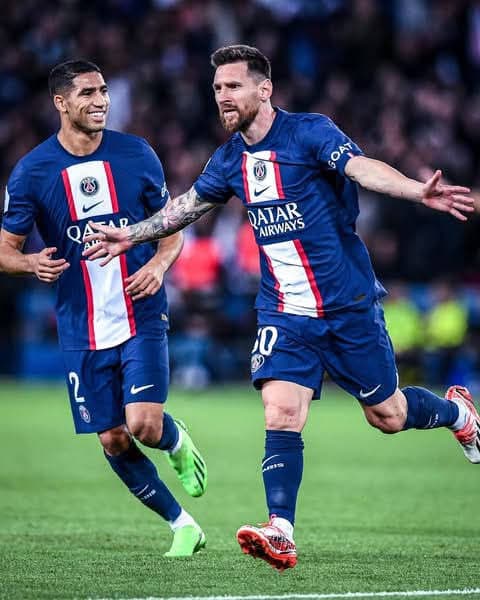
Achraf Hakimi has revealed how Lionel Messi's arrival at Paris Saint-Germain transformed his role at the French club, admitting that the tactical changes left him struggling to express himself and affected his confidence during his early days in Paris.
The Morocco international explained that joining a star-studded PSG squad initially appeared to offer an opportunity to continue the attacking football that had made him one of Europe's most exciting full-backs. However, Messi's unexpected arrival in August 2021 changed the team's approach and forced Hakimi to adapt to a more restricted role.
The defender's comments, originally made during an April 2026 appearance on The Bridge podcast, have resurfaced in November, attracting renewed attention after being shared in a discussion about his PSG experience.
His account offers an insight into the challenges of playing alongside some of football's biggest names, particularly when their arrival changes the responsibilities of other established players.
How Lionel Messi's Arrival Changed Hakimi's Role at PSG
Hakimi joined Paris Saint-Germain from Inter Milan in July 2021, having developed a reputation as an attacking full-back capable of creating chances, scoring goals and providing width.
During his spells with Borussia Dortmund and Inter, the Moroccan enjoyed considerable freedom to move forward and influence matches in the opposition half.
His performances in those systems established him as one of the most dangerous players in his position.
When Hakimi signed for PSG, Neymar and Kylian Mbappé were already part of the squad. He understood that he would be joining a team filled with attacking talent.
What he did not anticipate was Messi's arrival from Barcelona just weeks later.
Speaking on The Bridge, a programme hosted by Real Madrid midfielder Aurélien Tchouaméni, Hakimi explained that the Argentine's signing altered PSG's tactical structure.
The new system demanded different responsibilities from the Moroccan defender, including spending more time in defensive positions rather than making the attacking runs that had previously defined his game.
For Hakimi, the adjustment proved particularly difficult because his greatest qualities were closely associated with his ability to contribute in attack.
He was no longer operating with the same freedom he had enjoyed in Germany and Italy.
The defender made clear that the issue was not simply sharing the pitch with Messi, but how the team's playing style changed after his arrival.
Hakimi Admits He Struggled With Confidence in Paris
Beyond the tactical changes, Hakimi acknowledged that his difficult adjustment had a personal impact.
As reported by Get French Football News in April 2026, the Moroccan reflected on a period when he struggled to reproduce the performances that had made him such an influential player at his previous clubs.
"I felt like a small player," Hakimi admitted.
The remark described his reduced influence within PSG's system rather than suggesting a personal dispute with Messi.
For an attacking full-back accustomed to taking responsibility in the final third, being required to remain deeper presented a significant challenge.
Hakimi's comments also underline an important aspect of elite football: a player's effectiveness depends not only on individual ability but also on the tactical responsibilities assigned by the team.
A defender who thrives when given freedom to attack may struggle to demonstrate the same qualities in a system that prioritises positional discipline.
That does not necessarily make one tactical approach better than another. However, it can substantially change how a player's performances are perceived.
Hakimi's experience at PSG illustrates how even a high-profile signing can face difficulties adapting when the football environment changes unexpectedly.
Why Hakimi Played Differently for Morocco and PSG
One of the most revealing parts of Hakimi's account concerned the contrast between his performances for Morocco and Paris Saint-Germain.
While he struggled to find the attacking freedom he wanted in Paris, he continued to occupy an influential position with the Moroccan national team.
That difference attracted criticism from observers who questioned why the defender appeared more comfortable representing his country than playing for his club.
Hakimi explained that the two environments required different approaches.
For Morocco, he enjoyed a prominent role and greater opportunities to demonstrate his attacking qualities.
At PSG, his responsibilities were shaped by the team's star forwards and the tactical balance needed to accommodate them.
The criticism became another source of frustration because, from his perspective, people were comparing performances produced under different tactical instructions.
The situation highlights an important distinction in evaluating footballers.
International and club teams rarely operate with identical systems, teammates or expectations. A player can therefore perform different roles without experiencing any fundamental change in ability.
For Moroccan football supporters, Hakimi's explanation provides additional context to a period when his influence for the national team appeared different from his performances in France.
It also offers a reminder that players from African national teams can carry substantial responsibilities for their countries while performing more limited roles at major European clubs.
What Hakimi's Revelation Says About PSG's Superstar Era
Messi's arrival at PSG in August 2021 created one of the most celebrated attacking line-ups in modern football.
The Argentine joined Neymar and Mbappé in a squad assembled with the ambition of competing for European football's biggest honours.
However, bringing exceptional individual talents together did not automatically guarantee that every player's strengths would be maximised.
Messi spent two seasons at PSG before leaving for Inter Miami in 2023. During that period, the French club won two Ligue 1 titles but failed to secure the Champions League.
Hakimi's recollections provide a different perspective on that era, focusing on the experiences of a teammate whose responsibilities changed as the club adjusted its approach.
His remarks should not be interpreted as an accusation that Messi personally caused PSG's wider difficulties. Instead, they describe how a major signing influenced the team's structure and one player's confidence.
Readers following PSG's wider development can explore Onibsport's Champions League coverage, including the club's changing European ambitions.
The discussion also connects with broader questions about balancing individual talent and collective performance, a recurring subject across world football.
Hakimi's comments have returned to the spotlight months after the original interview, but they offer a lasting lesson about the challenges footballers encounter when joining ambitious clubs.
For supporters, the most important point may be that assembling world-class players is only one part of building a successful team.
Ensuring that those players can perform effectively together is another challenge entirely.
And for Hakimi, the experience demonstrated how quickly a player's confidence and influence can change when a team's tactical priorities shift.
Reporting based on information from facebook.com.
Advertisement

 Next story / African FootballSenegal AFCON Appeal: CAS Verdict on Title Due Tuesday